Morocco
And Their Children After ThemMorocco is the family homeland to which Hacine Bouali travels with his father and, later, the place where he is forced to remain for two years. It is at once a site of family duty, estrangement, and economic opportunity: Hacine arrives expecting to feel alien among the locals, learns to navigate their world, and eventually returns to Heillange with fear, shame, and most of his savings gone. His experiences there complicate the idea that returning to a place of origin necessarily restores a sense of belonging.
Family Visits and Obligations
Two years before one of his journeys home, Hacine and his father travel to Morocco in a car packed with goods for relatives and resale: perfume, coffee, soap, clothes for younger cousins, and Levi’s. On the ferry, his father cuts his hair and takes fresh clothes and leather shoes from a suitcase for him to wear. The preparations make the trip a family presentation as well as a crossing. Hacine’s mother meets them after the Mediterranean crossing and embraces him, an attention that embarrasses him; other relatives wait nearby, and he initially sees them as unfamiliar and disapproving.
The family’s unfinished house makes the distance between Morocco and the life Hacine’s father has established in France visible. During their visit to the building site, the structure remains incomplete, with partly framed walls and exposed construction materials. Workers cite delays, permits, and payments; Hacine’s father accepts that his own absence has left him unable to supervise the work. The stalled house is not merely a construction problem: it stands as evidence of his separation from his wife and of a family life divided between countries.
When his father later leaves Tétouan for France, he entrusts Hacine with looking after his mother and overseeing the construction. Hacine agrees, although he would rather his father stay and take responsibility himself. His father’s warning about what will happen if Hacine fails carries the weight of a familiar threat, but the narrative also notes that such threats have been repeated often enough to lose their force. Family obligation thus arrives as both genuine dependence and a strained inheritance.
The Two-Year Stay
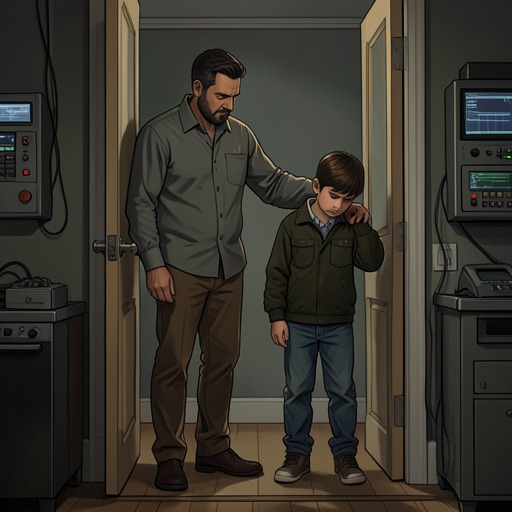
Hacine’s later stay begins not as a chosen return but as a punishment: after the family’s conflict over the motorcycle, his father takes him to Morocco and leaves him there. The journey includes a long drive toward Gibraltar, a ferry crossing, and lengthy negotiations at Moroccan customs in Ceuta. Hacine remains in the car, resentful and overwhelmed by the heat and the crowds. Once settled, he must share a small apartment with uncles and cousins, including at night, and adjust to a crowded household and his mother’s repeated complaints about his behavior. He sometimes slips into the stairwell to cry. The sea and his cousin Ghizlane offer relief from this confinement.
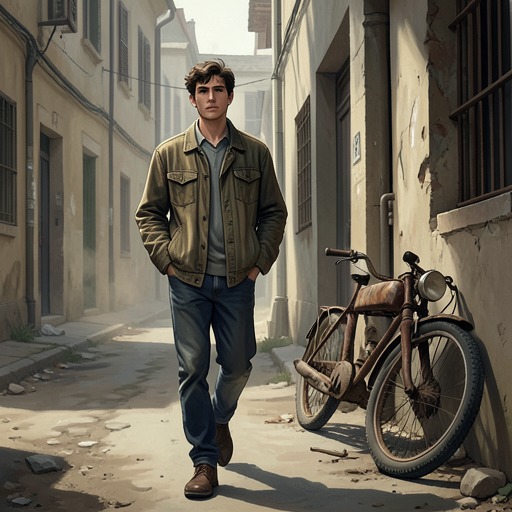
Before this enforced stay, Hacine had visited Morocco during summer vacations but kept his distance from local people, whom he regarded with suspicion and contempt. Being unable to leave changes his view. Through his cousin Driss and Driss’s friends, Hacine recognizes familiar routines: spending time together, playing video games, joking, and thinking about girls. The difference is not that the young people have entirely different interests, but that Hacine had previously mistaken unfamiliar surroundings for an unfamiliar way of life.
Work, Investment, and Failure
Hacine also discovers the scale of the cannabis economy in the Rif. The trade, he learns, reaches beyond individual dealers: money circulates through many layers of local life, including wholesalers, officials, transporters, police, and politicians. He wants a share. Driss gives him a small quantity to sell to tourists, and Hacine progresses from street-level dealing to buying larger amounts and investing in shipments bound for France and Germany. The work lets him imagine himself as an entrepreneur, while his ordinary evenings at home preserve the appearance of a normal family routine.
That apparent success leads into a disastrous property venture. Hacine and Driss invest in projects in Saida, Eassouira, and Nador, signing documents that leave them responsible for substantial costs. After the projects begin, demands for workers’ pay and unofficial payments arrive alongside threatening letters. A fire in the stairwell of the building where Hacine’s family lives increases their fear; Driss is later attacked, and the cousins pay what is demanded. Hacine decides the venture is over. With his father experiencing heart problems, he resolves to return to Heillange, carrying the last of his savings as well as fear and shame.
Return, Memory, and Belonging
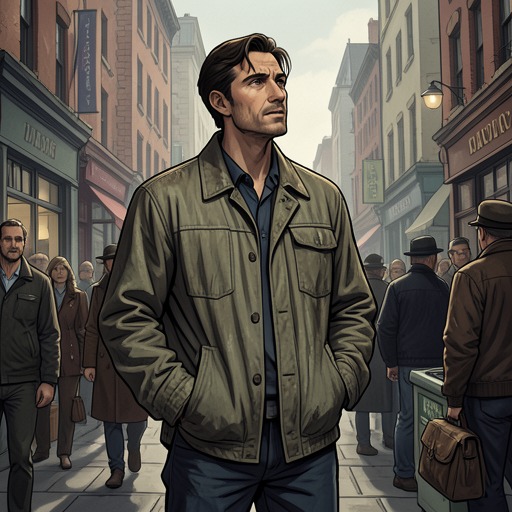
The return does not make Morocco a closed chapter. After two years away, Hacine arrives back in Heillange looking fragile, in contrast to the stories circulating among people who had imagined that he was prospering. Later, he remembers the Moroccan friends and the hours spent together by the sea, and he recognizes that his first assumptions about the people there had been wrong. Morocco remains in his memory as a place of both shared youth and painful displacement.
A later holiday in Six-Fours gives Hacine a different perspective on France. He and Coralie spend two weeks at a seaside campground, following the settled routines of meals, swimming, and rest. On the drive home along the A7, he feels accepted among the holiday traffic in a way that unsettles his old sense of being caught between two kinds of rootlessness. The annual movement of vacationers seems to create a temporary, widely shared French identity, even as its pleasures are bounded by the return to work. The contrast does not erase Morocco from Hacine’s sense of himself; instead, it shows how belonging can arise through ordinary shared routines as well as through ancestry.
Hacine’s father eventually returns to Morocco for good after the trial following the assault at L’Usine. Hacine speaks to him by telephone, but the voice seems increasingly unfamiliar, and he delays visiting because he fears encountering someone who has become a stranger. Morocco therefore remains bound to an unfinished obligation between father and son: a homeland associated with the father’s plans, Hacine’s forced separation, and a family connection that neither distance nor return can readily repair.